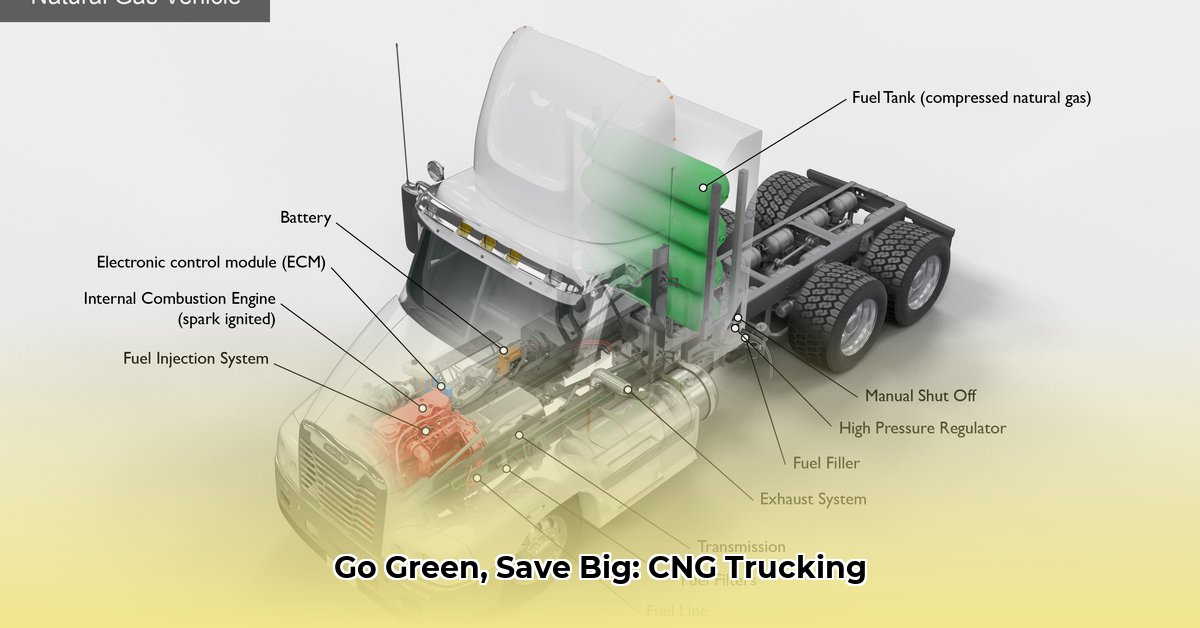
CNG tractor trailers represent a significant shift in the trucking industry, promising substantial cost savings and reduced environmental impact. But is this a realistic pathway to a greener future, or are significant obstacles hindering widespread adoption? This article explores the compelling advantages, significant challenges, and actionable steps needed to make CNG a dominant force in long-haul trucking. For more information on fuel efficiency, check out this helpful resource.
The Promise of Compressed Natural Gas (CNG) for Trucking
The allure of CNG is undeniable. Reports indicate fuel savings of up to $2 per gallon compared to diesel – a massive difference for fleets. For a fleet consuming 20,000 gallons annually per truck, this translates to potential savings of $40,000 per truck! This financial incentive alone is driving major trucking companies like Ryder to seriously consider CNG as a strategic shift.
Beyond the economic benefits, CNG boasts significant environmental advantages. These trucks produce considerably less sulfur dioxide and nitrogen oxides than diesel counterparts. This directly translates to cleaner air and a smaller carbon footprint. However, a crucial caveat is methane leakage. Methane, a potent greenhouse gas, can escape during extraction and transportation, potentially offsetting the environmental gains. This requires focused attention and mitigation strategies. Does the potential for cost savings outweigh the complexities of addressing methane emissions?
Navigating the Roadblocks to Widespread CNG Adoption
Despite the compelling benefits, several obstacles hinder the widespread adoption of CNG tractor trailers. The most significant challenge is the lack of a robust fueling infrastructure. Many regions lack sufficient public CNG stations, creating a logistical nightmare for long-haul trucking. This creates a classic "chicken-and-egg" scenario: more CNG trucks would incentivize investment in infrastructure, but without it, companies are hesitant to commit.
Another critical limitation is CNG's lower energy density compared to diesel. This translates to shorter driving ranges and more frequent refueling stops, impacting operational efficiency and potentially delaying deliveries. Technological advancements are crucial to address this—improvements in storage tanks and compression systems, particularly for LNG (liquefied natural gas), are vital to enhancing range and refueling convenience. Can technological breakthroughs overcome the infrastructure deficit and competition from established diesel technology?
Weighing the Pros and Cons: A Balanced Perspective
To understand the true potential of CNG, it's critical to weigh the advantages and disadvantages objectively:
Advantages:
- Significant Cost Savings: Reduced fuel costs lead to substantial annual savings for fleet owners.
- Environmental Benefits: Reduced emissions contribute to cleaner air and a smaller carbon footprint, aligning with growing sustainability concerns.
- Government Incentives: Many governments offer financial incentives (tax credits, grants) to encourage CNG adoption.
- Flexible Leasing Options: Leasing arrangements can mitigate upfront financial risk for trucking companies.
Disadvantages:
- Limited Fueling Infrastructure: The scarcity of public CNG fueling stations remains a major limitation.
- Reduced Driving Range: Lower energy density necessitates more frequent refueling, impacting operational efficiency.
- Technological Limitations: Further technological advancements are essential to enhance range and performance parity with diesel.
- Methane Emission Concerns: Methane leakage throughout the natural gas supply chain poses a significant environmental challenge.
A Collaborative Path Forward: Actionable Steps for Stakeholders
The widespread adoption of CNG requires a collaborative effort. Here's a breakdown of essential actions for key stakeholders:
1. Fleet Operators:
- Short-Term: Pilot CNG truck projects; explore leasing options; assess existing infrastructure.
- Long-Term: Full-scale CNG adoption; route optimization to minimize refueling stops; advocate for improved infrastructure.
2. Fuel Companies:
- Short-Term: Strategic investment in CNG fueling station infrastructure; build partnerships with fleet operators.
- Long-Term: Expand network density; develop advanced refueling technologies; explore sustainable natural gas sourcing (e.g., renewable natural gas (RNG)).
3. Government Agencies:
- Short-Term: Offer financial incentives; invest in infrastructure development; implement stricter emission regulations.
- Long-Term: Develop a nationwide CNG fueling network; fund research and development; consider carbon pricing mechanisms.
4. Technology Providers:
- Short-Term: Focus on improving CNG storage and compression technologies; enhance vehicle efficiency.
- Long-Term: Develop next-generation CNG vehicles with extended range; explore integrating RNG sources.
Mitigating Methane Leakage: A Crucial Element
Addressing methane leakage is critical to realizing CNG's environmental benefits. Leaks throughout the natural gas supply chain can negate the positive impact of using cleaner-burning fuel. A multi-pronged approach is essential:
1. Preventative Measures: Regular inspections, advanced sealing technologies, and improved tank designs are foundational.
2. Leak Detection and Repair: Real-time monitoring, remote diagnostics, and rapid response teams are crucial for immediate mitigation.
3. Operational Best Practices: Adequate driver training and standardized refueling procedures are necessary to minimize human error contributing to leaks.
The Future of CNG: A Transition Fuel
CNG represents a transitional fuel, a bridge towards a truly sustainable transportation future. While it offers immediate benefits, the long-term goal must include further investment in alternative fuels like hydrogen and the continued optimization of electric vehicle technology. The journey towards widespread CNG adoption will be complex, but the potential rewards—both economic and environmental—are significant. The success of CNG depends greatly on a collaborative effort involving all stakeholders.